1. The Big Picture: How Networks Connect Our World
Imagine you are sitting in a classroom and want to send a message to your friend across the aisle. You can scribble a quick note on a piece of paper and hand it directly to them. It takes two seconds, requires zero postage stamps, and nobody else needs to be involved.
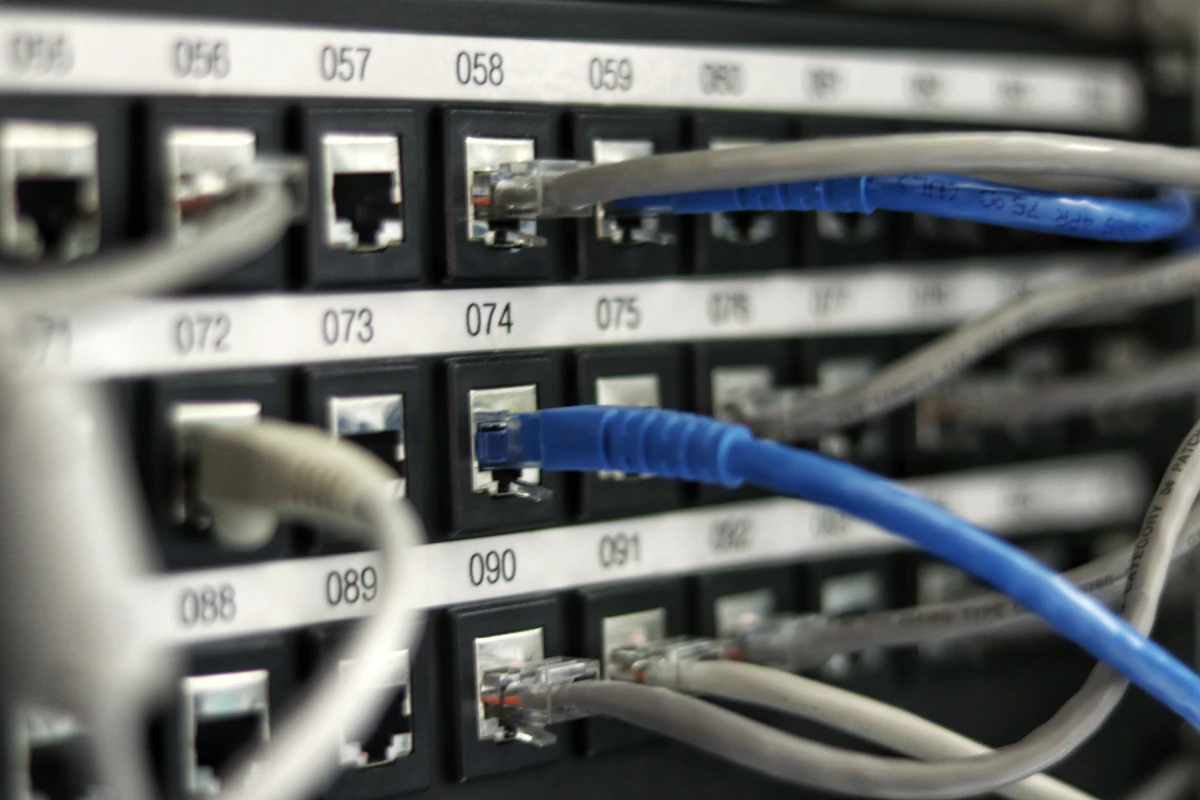
Now imagine you want to send a birthday gift to your cousin living in London, while you are in New York. You can no longer just hand it across a desk. You have to box it, write a formal destination address, drop it off at a local postal station, let delivery vans transport it to an airport cargo plane, fly it across the Atlantic Ocean, sort it in a central international depot, and have a local delivery van bring it to their front door.
In computer science, computer networks work exactly the same way. Connecting two microcontrollers inside your car's steering wheel requires a completely different kind of engineering than connecting your smartphone to a YouTube server located in Dublin. This fundamental trade-off between geographic distance, speed, hardware cost, and reliability is why we have distinct categories of networks: CAN, PAN, LAN, MAN, and WAN.
1.1 The Three Essential Building Blocks: Nodes, Links, and Packets
Every computer network—regardless of whether it spans two feet or twelve thousand miles—is built from three fundamental ingredients:
- Nodes (The Endpoints): Any device capable of sending, receiving, or forwarding data. This includes your laptop, smartphone, smart TV, a network printer, or an Engine Control Unit (ECU) inside a vehicle.
- Links (The Highways): The physical or wireless medium over which signals travel. Common physical links include copper twisted-pair cables (like Ethernet Cat6), fiber-optic glass cables (carrying light pulses), and wireless radio frequencies (Wi-Fi, Bluetooth, 4G/5G).
- Packets (The Envelopes): Computers rarely send large files as one giant continuous stream. Instead, files are chopped into small, bite-sized chunks called packets. Each packet has a header (containing the sender and receiver addresses) and a payload (the actual slice of data).
1.2 Bandwidth vs. Latency: The Water Pipe Mental Model
Students frequently confuse Bandwidth and Latency. In networking exams and technical interviews, confusing these two concepts is one of the quickest ways to lose points. Here is the visual mental model you should remember:
| Concept | Water Pipe Analogy | Networking Definition | Typical Units |
|---|---|---|---|
| Bandwidth (Throughput) | The width of the pipe. A wider pipe allows more liters of water to flow through per second. | The maximum volume of data that can be transferred across a link in one second. | Mbps (Megabits/sec), Gbps (Gigabits/sec) |
| Latency (Ping / Delay) | The length of the pipe. How many milliseconds it takes for the first drop of water to travel from the tap to the bucket. | The time required for a single data packet to travel from the sender to the destination. | Milliseconds (ms), Microseconds (μs) |
The Fundamental Networking Relationship:
$$\text{Total Delivery Time} = \text{Transmission Delay} + \text{Propagation Delay} + \text{Queuing Delay}$$- Transmission Delay: $\frac{\text{Packet Size (bits)}}{\text{Bandwidth (bps)}}$ — How quickly your network card can push the bits onto the wire.
- Propagation Delay: $\frac{\text{Distance (meters)}}{\text{Speed of Signal (m/s)}}$ — How long light or electricity physically takes to travel the distance (limited by the speed of light in glass $\approx 200,000\text{ km/s}$).
- Queuing Delay: Time spent waiting in router buffers when traffic is congested.
1.3 The Geographic Scale Spectrum: From Micro to Global
Why can't we just use Wi-Fi or standard Ethernet for everything? Because physical laws and economic costs impose hard boundaries:
- Over short distances (under 10 meters), electrical signals stay crisp, wires are cheap, and latency is virtually zero.
- Over medium distances (a building or campus), we can afford dedicated switches and high-speed copper/fiber cables that we own and manage directly.
- Over long distances (across cities and oceans), no single company or university can dig up roads and lay private cables worldwide. We must route through public telecom carriers, Internet Service Providers (ISPs), and undersea fiber backbones.
Below is the geographic scale hierarchy that maps every network type we will explore in this guide:
flowchart TD
    subgraph Scale ["The Geographic Scale Hierarchy of Networks"]
        CAN["CAN: Controller Area Network
Scope: Inside a Machine / Vehicle
Range: 1 to 40 meters"]
        PAN["PAN: Personal Area Network
Scope: Around a Person
Range: Under 10 meters"]
        LAN["LAN: Local Area Network
Scope: Single Room, Home, or Office
Range: Up to 100-500 meters"]
        MAN["MAN: Metropolitan Area Network
Scope: College Campus or City
Range: 5 to 50 kilometers"]
        WAN["WAN: Wide Area Network
Scope: Country, Continent, Global Internet
Range: Thousands of kilometers"]
    end
    CAN --> LAN
    PAN --> LAN
    LAN --> MAN
    MAN --> WAN
Now that we have established the mental framework and vocabulary, let's zoom in to the smallest and most resilient tier: networks operating inside vehicles, machines, and personal spaces.
2. CAN (Controller Area Network) & PAN: Networking Inside Machines & Personal Spaces
When most students think of networking, they picture laptops connecting to Wi-Fi routers. But one of the most vital networks you rely on every single day is completely hidden from view: the network operating inside modern cars, passenger airplanes, medical imaging machines, and industrial assembly robots.
This is the CAN Bus (Controller Area Network). If a modern automobile were a living creature, the engine, brakes, airbags, steering, and transmission would be the organs, and the CAN bus would be the central nervous system transmitting electrical impulses between them.
2.1 Why Don't Cars Just Use Normal Ethernet or Wi-Fi?
Students frequently ask: "Why did automotive engineers invent CAN? Why not just plug an Ethernet switch into a car?"
There are three critical real-world engineering reasons:
- Wiring Weight and Clutter: Before CAN was invented by Bosch in 1986, every sensor had a dedicated pair of copper wires running directly to each dashboard indicator. In a modern car with over 80 electronic controllers, that point-to-point wiring would weigh more than 100 kg (220 lbs) and create miles of tangled wire. CAN connects all sensors to a single shared two-wire bus (CAN High and CAN Low), saving weight and reducing fuel consumption.
- Extreme Electromagnetic Noise: Cars are hostile electrical environments. Spark plugs, starter motors, and air conditioners create intense electromagnetic interference. Standard Ethernet copper wires would suffer continuous packet corruption. CAN uses differential signaling: the receiver measures the voltage difference between the two wires, so external noise that hits both wires equally is automatically canceled out.
- Real-Time Life-or-Death Priority: If you slam on the emergency brakes, the Anti-Lock Braking System (ABS) command must reach the wheels in less than a millisecond. On standard Ethernet or Wi-Fi, two devices trying to talk at the same time cause a collision and must back off and wait. In a car, an emergency brake packet cannot wait! CAN guarantees that high-priority safety packets always win the bus instantly.
2.2 The Magic of CAN Arbitration: The Megaphone Analogy
How does CAN resolve conflicts without causing data collisions? It uses an elegant mechanism called CSMA/CR (Carrier Sense Multiple Access with Collision Resolution) based on Dominant (0) and Recessive (1) bits.
Because `0` is dominant over `1`, the message with the lowest binary message ID has the highest priority and takes complete control of the bus without losing a single bit of transmission time.
flowchart LR
    subgraph CANBus ["Shared Two-Wire CAN Bus (CAN_H & CAN_L)"]
        direction LR
        B1["CAN Bus Line"]
    end

    ECU1["Airbag ECU
ID: 0x010 (Priority 1)"] <--> CANBus
    ECU2["Brake ECU (ABS)
ID: 0x020 (Priority 2)"] <--> CANBus
    ECU3["Engine ECU
ID: 0x050 (Priority 3)"] <--> CANBus
    ECU4["Climate Control ECU
ID: 0x200 (Low Priority)"] <--> CANBus
2.3 PAN: Personal Area Network
Before we step up to full buildings and campuses, there is another micro-scale network: the PAN (Personal Area Network).
A PAN covers the personal workspace around an individual—typically within a radius of 1 to 10 meters. Common PAN technologies include:
- Bluetooth: Connecting your wireless earbuds to your phone or your wireless mouse to your laptop.
- NFC (Near Field Communication): Ultra-short range (under 4 cm) used for contactless card payments like Apple Pay and Google Wallet.
- Zigbee / Z-Wave: Low-power wireless protocols for smart home devices like smart lightbulbs and door sensors.
2.4 Student Lab: Simulating CAN Bus Priority Arbitration in Python
Here is a runnable Python script that simulates how two vehicle ECUs compete for a shared bus. Run this on your computer to watch the low-priority ECU back off automatically when it detects a dominant zero:
# can_arbitration_demo.py
# A simple educational simulation of CAN Bus message arbitration

def simulate_can_arbitration(ecu_a_id: int, ecu_b_id: int):
    # Convert IDs to 11-bit binary strings (standard CAN identifier length)
    bin_a = f"{ecu_a_id:011b}"
    bin_b = f"{ecu_b_id:011b}"

    print(f"--- CAN Bus Arbitration Simulation ---")
    print(f"Node A (Brakes)  ID: 0x{ecu_a_id:03X} -> Binary: {bin_a}")
    print(f"Node B (Climate) ID: 0x{ecu_b_id:03X} -> Binary: {bin_b}\n")

    # In CAN bus physical layer: 0 is Dominant, 1 is Recessive
    bus_state = []
    for bit_index in range(11):
        bit_a = bin_a[bit_index]
        bit_b = bin_b[bit_index]

        # If either node sends a '0', the bus physically reads '0' (dominant)
        bus_bit = '0' if (bit_a == '0' or bit_b == '0') else '1'
        bus_state.append(bus_bit)

        # Check if Node B transmitted '1' (recessive) but sees '0' on the bus
        if bit_b == '1' and bus_bit == '0':
            print(f"[Bit {bit_index + 1}]: Node B sent '1', but bus is '0'.")
            print(f"==> Node B loses arbitration and yields immediately!")
            print(f"==> Node A wins and continues transmitting without interruption.\n")
            return "Node A (Higher Priority) Won the Bus!"

    return "Both IDs were identical (Invalid CAN Configuration)"

# Run simulation: Brake ECU (0x020) vs Climate Control ECU (0x150)
result = simulate_can_arbitration(0x020, 0x150)
print(f"Result: {result}")
Notice how Node B yields on the very first bit where its value differs from Node A. No packets were destroyed, no collisions occurred, and zero bandwidth was wasted on re-transmissions. Next, let's step up in scale to the network you interact with every single day: the Local Area Network (LAN).
3. LAN (Local Area Network): The Workhorse of Homes, Labs & Offices
If you have ever connected your laptop to a home Wi-Fi network, plugged an Ethernet cable into a college lab computer, or printed a term paper over the university library printer, you were using a LAN (Local Area Network).
A LAN is a privately owned computer network that covers a small geographic area—typically a single room, an apartment, a school building, or a small office floor. Its physical reach usually spans from 10 meters up to a few hundred meters.
3.1 The Two Key Characteristics of Every LAN
- Private Ownership and Full Control: Unlike the Internet, which spans public infrastructure, your home LAN is completely owned and managed by you. You buy the Wi-Fi router, you choose the password, and you decide which devices are allowed to connect.
- High Speeds and Low Latency at Low Cost: Because copper cables and Wi-Fi signals only have to travel short distances, LANs achieve blistering speeds—typically 100 Mbps to 10 Gbps—with microscopic latencies under 1 millisecond, all using inexpensive, off-the-shelf equipment.
3.2 MAC Address vs. IP Address: The Passport and Mailing Address Analogy
One of the most fundamental questions students face in networking exams is: "Why does my computer have both a MAC address and an IP address?"
- MAC Address (Media Access Control): Your physical passport or government ID number. It is permanently burned into your computer's Network Interface Card (NIC) at the factory (e.g.,
00:1A:2B:3C:4D:5E). Wherever you travel in the world, your passport number never changes. - IP Address (Internet Protocol): Your temporary postal mailing address. When you are in your university dorm room, you have one postal address; when you travel home for summer vacation, you have a completely different postal address. Similarly, when you disconnect your laptop from college Wi-Fi and reconnect at home, your router gives you a brand new local IP address (e.g.,
192.168.1.42).
3.3 Hubs vs. Switches: Why Switches Revolutionized LANs
In the early days of networking, computers on a LAN were connected using a device called a Hub. Hubs were "dumb" devices: when Computer A sent a message meant for Computer B, the hub blindly blasted that electrical signal out to every single computer plugged into it.
This was like a person shouting every private conversation through a megaphone into a crowded room. If two computers tried to speak at once, the electrical signals collided, corrupted each other, and forced both computers to pause and retry (the CSMA/CD protocol).
Modern LANs exclusively use Network Switches. A switch is an intelligent device that maintains a table mapping each physical port to the specific MAC address plugged into it. When Computer A sends a message to Computer B, the switch reads the destination MAC address and forwards the electrical frame only to Computer B's port.
flowchart TD
    Switch["Smart Gigabit Switch
(Maintains MAC Address Table)"]
    PC1["Student Laptop A
MAC: AA:AA:AA:AA:AA:AA"]
    PC2["Student Laptop B
MAC: BB:BB:BB:BB:BB:BB"]
    Server["Lab File Server
MAC: CC:CC:CC:CC:CC:CC"]
    Printer["Network Printer
MAC: DD:DD:DD:DD:DD:DD"]

    PC1 <-->|"Port 1 (Direct Full-Duplex)"| Switch
    PC2 <-->|"Port 2 (Direct Full-Duplex)"| Switch
    Server <-->|"Port 3 (Direct Full-Duplex)"| Switch
    Printer <-->|"Port 4 (Direct Full-Duplex)"| Switch
Because every port on a modern switch has a dedicated, private communication channel, collisions are physically impossible in full-duplex Ethernet! Every computer can transmit and receive data at the same time at maximum speed.
3.4 Student Hands-On Lab: A 15-Line Local Echo Server in Python
You can turn your laptop into both a LAN server and a client using Python's built-in socket library. Open your terminal, save this code as local_lan_server.py, and run it:
# local_lan_server.py
# A lightweight local TCP server demonstrating LAN socket communication
import socket

# Bind to localhost (127.0.0.1) on port 8080
server_socket = socket.socket(socket.AF_INET, socket.SOCK_STREAM)
server_socket.bind(('127.0.0.1', 8080))
server_socket.listen(1)
print("[Server] LAN Echo Server is listening on 127.0.0.1:8080...")

# Accept incoming connection
conn, addr = server_socket.accept()
print(f"[Server] Accepted connection from client at {addr}")

# Receive message, transform, and echo back
data = conn.recv(1024).decode('utf-8')
print(f"[Server] Received message: '{data}'")

response = f"Echo from Server: You sent '{data}' successfully over LAN!"
conn.sendall(response.encode('utf-8'))

conn.close()
server_socket.close()
print("[Server] Connection closed cleanly.")
Now in a second terminal window, run a quick one-liner client to connect to it:
# Run this in a second terminal to send a message to your server:
python -c "import socket; s = socket.socket(); s.connect(('127.0.0.1', 8080)); s.sendall(b'Hello from Student Terminal!'); print(s.recv(1024).decode()); s.close()"
- On Windows, open PowerShell and type:
ipconfig /all - On Mac / Linux, open Terminal and type:
ifconfigorip addr show - Look for your IPv4 Address (usually starting with
192.168.x.xor10.x.x.x) and your Physical Address / ether (your 48-bit MAC address).
LANs are fantastic for connecting devices within a single room or building. But what happens when a university needs to connect five different campus campuses across town, or when you need to load a web page hosted on another continent? For that, we must scale up to MANs and WANs.
4. MAN (Metropolitan Area Network) & WAN (Wide Area Network): Scaling to Cities & The Global Internet
When you leave your house, your personal Wi-Fi signal fades away within thirty paces. So how does a video you stream on your phone travel from a server located three thousand miles away directly onto your screen? The answer lies in scaling up from local networks to MANs (Metropolitan Area Networks) and WANs (Wide Area Networks).
4.1 MAN: The City and Campus Highway
A MAN (Metropolitan Area Network) spans a larger geographic area than a single building, but is smaller than an entire country. Typically, a MAN covers an entire city, a municipal district, or a large multi-campus university, spanning 5 to 50 kilometers.
- University Multi-Campus Network: A university whose Engineering school, Medical center, and Law school are located across different neighborhoods in the city, connected by high-speed fiber-optic lines.
- Cable Television Network (CATV): The coaxial and optical fiber distribution network that delivers cable television and internet to thousands of households across an entire city.
- Smart City Infrastructure: Municipal networks that connect automated traffic signals, city surveillance cameras, and public Wi-Fi access points across town.
MANs almost always use fiber-optic cables laid underground or strung on utility poles, often arranged in a Fiber Ring Topology. If construction workers accidentally cut a fiber cable on one street, the network automatically redirects traffic the other way around the ring in less than 50 milliseconds, keeping city services online.
4.2 WAN: The Global Backbone of the Planet
A WAN (Wide Area Network) spans massive geographic boundaries—connecting states, entire countries, and different continents. A WAN can stretch across thousands or even tens of thousands of kilometers.
The largest, most famous, and most powerful WAN on planet Earth is the Internet itself. The Internet is literally a network of networks: millions of private, public, academic, and government LANs all linked together through high-speed telecommunications backbones.
Because no single university or private citizen can afford to bury transcontinental cables, WAN infrastructure is owned and operated by telecommunication giants, national governments, and global cloud providers. Packets travel across:
- Undersea Submarine Cables: Giant armored fiber-optic cables lying on the ocean floor that carry over 95% of all transcontinental internet traffic across the Atlantic and Pacific oceans.
- Core Internet Routers: Massive, industrial-grade routers costing hundreds of thousands of dollars that process millions of routing decisions per second.
- Communication Satellites: Satellite constellations (such as Starlink or geostationary satellites) providing connectivity to remote islands, ships, and planes.
4.3 The Critical Distinction: Switch vs. Router
In college exams and junior engineering interviews, professors and interviewers will almost certainly ask: "What is the exact difference between a Switch and a Router?"
| Feature | Network Switch (Layer 2) | Network Router (Layer 3) |
|---|---|---|
| Primary Scope | Connects devices within the same local network (LAN). | Connects different networks together (LAN to WAN). |
| Addressing Used | Forwards frames using Hardware MAC addresses. | Routes packets using Logical IP addresses. |
| Analogy | An office mail sorter delivering letters between cubicles on the same floor. | The national postal system routing mail trucks between different cities and countries. |
| Broadcast Traffic | Forwards broadcast packets to all connected ports (same broadcast domain). | Blocks broadcasts from spreading across networks (separates broadcast domains). |
4.4 The Journey of a Packet: From Your Laptop to Google
Here is how all these pieces fit together when a student in a university library types www.google.com into their web browser:
flowchart TD
    subgraph LAN ["1. Your College Dorm (LAN)"]
        Laptop["Student Laptop
192.168.1.15"]
        Switch["Dorm Switch
(MAC Forwarding)"]
        Laptop -->|"Ethernet / Wi-Fi"| Switch
    end

    subgraph MAN ["2. University Campus (MAN)"]
        CampusRouter["Campus Core Router"]
        FiberRing["Underground Campus Fiber Ring
(10 Gbps)"]
        Switch --> CampusRouter
        CampusRouter --> FiberRing
    end

    subgraph WAN ["3. The Global Internet (WAN)"]
        ISP["Regional Internet Service Provider (ISP)"]
        UnderseaCable["Transcontinental Undersea Fiber Cable"]
        GoogleEdge["Google Edge Gateway Router"]
        CloudServer["Google Web Server Cluster"]

        FiberRing --> ISP
        ISP --> UnderseaCable
        UnderseaCable --> GoogleEdge
        GoogleEdge --> CloudServer
    end
4.5 Student Hands-On Lab: Watching Packets Hop Across the Globe
You don't need expensive network gear to watch the transition from your LAN to a global WAN in real time. Your operating system comes with a built-in diagnostic tool called traceroute (or tracert on Windows).
Open your command line terminal and run:
- On Windows:
tracert 8.8.8.8 - On Mac / Linux:
traceroute 8.8.8.8
Look closely at the output:
- Hop 1: (e.g.
192.168.1.1) — Your local home Wi-Fi router (your LAN gateway). It takes under 1 ms. - Hops 2–3: Your local neighborhood cable exchange or campus aggregation router (the MAN tier).
- Hops 4–10+: Large telecom carrier backbones in Chicago, New York, or Dallas (the WAN tier). Notice how the latency jumps from 2 ms to 25 ms or 70 ms as physical distance increases!
Now that we have explored each tier individually, let's consolidate everything into a single master comparison table, review the top pitfalls students fall into during exams, and test your knowledge with real interview questions.
5. Master Comparison Matrix, Common Student Traps & Exam/Interview Prep
To help you prepare for university exams, lab practicals, and software engineering interviews, this section brings everything together into a side-by-side comparison table, breaks down the five most common exam traps, and tests your understanding with high-yield questions.
5.1 Master Comparison Table: PAN vs. CAN vs. LAN vs. MAN vs. WAN
| Network Type | Geographic Range | Typical Speed | Physical Media | Key Hardware | Primary Ownership | Classic Example |
|---|---|---|---|---|---|---|
| PAN (Personal Area) | Within 10 meters | 1 to 24 Mbps | 2.4 GHz RF radio, NFC | Bluetooth chips, NFC antennas | Individual person | Smartwatch paired to smartphone; wireless earbuds |
| CAN (Controller Area) | 1 to 40 meters | 1 to 5 Mbps (CAN-FD) | Shielded twisted copper (CAN_H, CAN_L) | Electronic Control Units (ECUs), CAN Transceivers | Machine manufacturer | Car engine, ABS brakes, steering, and airbags |
| LAN (Local Area) | 10 to 500 meters | 100 Mbps to 10 Gbps | Cat6 twisted pair copper, Wi-Fi | Network Switches, Wi-Fi Access Points, NICs | Homeowner, School, Private Business | University computer lab, home Wi-Fi, office floor |
| MAN (Metropolitan Area) | 5 to 50 kilometers | 1 Gbps to 100 Gbps | Single-Mode Optical Fiber, Wireless Microwave | Fiber Ring Switches, Optical Multiplexers | City Government, Cable TV provider, Telecom consortium | City-wide surveillance cameras, Cable TV, multi-campus university |
| WAN (Wide Area) | 100 to 10,000+ km | 10 Mbps to 400+ Gbps | Undersea fiber cables, Satellites, Leased lines | Core Border Routers, Satellite Transponders | Multiple telecom carriers, ISPs, Global Cloud providers | The Global Internet, AWS/Azure global backbone |
5.2 Top 5 Common Student Traps & Misconceptions
The Reality: Wi-Fi is simply a wireless LAN (WLAN). When your phone connects to Wi-Fi, it joins your local LAN. The small box in your house typically combines three devices in one plastic shell: an Ethernet Switch, a wireless Access Point (Wi-Fi), and a Router. Only the router's WAN port connects to the outside Internet.
The Reality: No! The Internet is the physical WAN infrastructure—the global mesh of routers, cables, and servers. The World Wide Web (WWW) is merely an application-layer service that runs on top of the Internet using HTTP/HTTPS to load web pages. Other services running on the Internet include email (SMTP), file transfers (FTP), and online gaming protocols.
The Reality: This is a Private IP Address reserved by RFC 1918. Because the world ran out of IPv4 addresses, millions of homes can safely reuse 192.168.1.x on their private LANs. When your traffic leaves your house, your router uses NAT (Network Address Translation) to convert your private LAN IP into your single unique Public IP provided by your ISP.
The Reality: Network speeds are measured in bits per second (lowercase 'b'), but file sizes on your computer are measured in Bytes (capital 'B'). Since $1\text{ Byte} = 8\text{ bits}$, divide your ISP speed by 8: $$\frac{100\text{ Mbps}}{8} = 12.5\text{ Megabytes/sec (MB/s)}$$ Your connection is not broken; it is operating at full speed!
The Reality: No. CAN is a completely decentralized multi-master broadcast bus. Every node hears every message. There is no central CPU deciding who gets to speak; message priority is embedded directly in the message identifier itself.
5.3 University Exam & Technical Interview Q&A
Q1: Why does wired Ethernet use CSMA/CD, while Wi-Fi uses CSMA/CA?
Answer: On a copper Ethernet cable, a network card can easily detect an electrical collision (Collision Detection - CD) by sensing a sudden voltage spike while transmitting. On wireless Wi-Fi, a transmitter drowns out its own receiver antenna, making it physically impossible to hear another node colliding during transmission. Therefore, Wi-Fi must take steps to avoid collisions beforehand (Collision Avoidance - CA) using random backoff timers and Request-to-Send / Clear-to-Send (RTS/CTS) handshakes.
Q2: If a company has one office in New York and one office in Chicago, what type of network connects them?
Answer: A WAN (Wide Area Network). Because the two offices are hundreds of miles apart, the company cannot lay private cables between them. They must use public telecommunication leased lines or an encrypted VPN tunnel traversing the public Internet to link the two separate LANs together.
Q3: What is the difference between a Collision Domain and a Broadcast Domain?
Answer:
- A Collision Domain is the network segment where packets can collide if sent simultaneously. Every port on a modern switch creates its own separate collision domain (zero collisions in full-duplex).
- A Broadcast Domain is the boundary within which a broadcast frame (like an ARP request) is received by all devices. Switches forward broadcasts, so all ports on a switch share one broadcast domain. Only a Router breaks up and stops broadcast domains.
Q4: Why are copper Ethernet cables made of 'Twisted' pairs?
Answer: Twisting the two wires cancels out electromagnetic interference (crosstalk) from adjacent pairs and external electrical noise. When external noise strikes the twisted pair, it affects both wires equally, allowing differential receivers to subtract the noise and preserve clean signal bits.
Q5: What happens when Computer A wants to send a packet to Computer B on a different network subnet?
Answer: Computer A inspects Computer B's destination IP address and compares it with its own subnet mask. Realizing Computer B is on an outside network, Computer A does not send the packet directly to Computer B. Instead, it sends the packet to the MAC address of its Default Gateway (the local Router), which routes the packet toward the destination network.
Q6: Why does a CAN bus have two 120-ohm terminating resistors at each physical end?
Answer: High-frequency electrical signals travel down copper wires like water waves in a channel. When a wave hits an open, unterminated wire end, it reflects back as an electrical echo, corrupting upcoming bits. Placing a 120-ohm resistor at each physical end absorbs the electrical signal completely, preventing wave reflections.
5.4 Three Hands-On Practice Challenges for Students
- Analyze Your Local Network: Open your terminal and run
ipconfigorifconfig. Find your Default Gateway IP. Open a web browser and type that IP address into the URL bar. Notice how it loads your home router's admin login portal! - Map the Internet Hops: Run
tracerouteto a server in another country (e.g.,traceroute bbc.co.uk). Count how many router hops it takes to reach London, and notice where the latency crosses the 80 ms threshold as the packet crosses the Atlantic Ocean. - Socket Programming Challenge: Modify the Python local echo server from Section 3 so that it converts any text sent by the client into ALL-CAPS before sending it back.
